By Sian Basker, co-CEO, Data Orchard
Charity leaders are more magpie than ostrich when it comes to AI. They are curious, alert to opportunity, and leaning in but they’re not fooled by shiny tools or hype.
Almost everyone is experimenting with AI. Almost no one is uncritical. Most leaders feel conflicted: interested and cautious, optimistic and uneasy, excited by the potential and sobered by the responsibility. That tension is real and healthy.
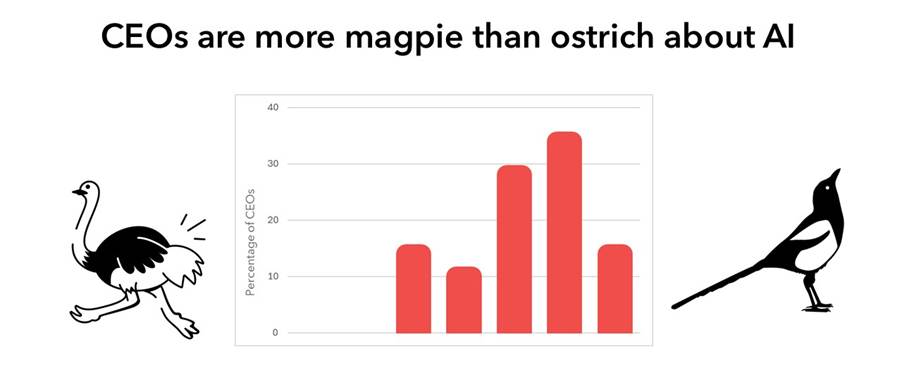
Figure 1: Would you describe yourself as more magpie or more ostrich when it comes to AI?
As a lifelong champion of technology for good, I’ve seen many digital tools come and go. I’ve never felt as conflicted about a technology as I do about AI. Partly that’s because of its scale and speed. But mostly it’s because as a leader the risks and responsibilities it brings feel unusually weighty.
Earlier this year, I asked fellow ACEVO members to share their views. Their responses mirrored my own: curiosity mixed with caution, pragmatism tempered by principle.
Leaders are leaning in
Despite the concerns, there is no evidence of leaders burying their heads in the sand. CEOs are exploring AI, testing tools, and learning what works. They are curious, cautious, excited, optimistic and interested.
All said they were using AI in their work to some extent: drafting and sense‑checking papers, organising complex information, generating ideas. Some are enthusiastic adopters:
“AI is a game‑changer for me as a disabled, neurodivergent leader. It supports executive function and reduces overwhelm. It’s not for creativity or critical thinking — but for organisation and structure, it’s enormously helpful. From a disability justice lens, it’s essential.”
Others described some frustrations and challenges:
“We have some Gen Z members of staff who really don’t like the ethics behind it and won’t use it. We have other staff with English as a second language who use it continually and unfortunately, it’s really obvious, which isn’t helping them to develop their own writing and presentation skills. It is a huge boon in my work, and I’m keen to learn more, but there is definitely a downside to it.”
“I’ve had the frustrating experience of an interim PA in board meetings relying totally on AI which produced nonsensical summaries of some conversations and took even longer than usual to unpick and re-write. The human element and engagement remain crucial.”
The combination of usefulness alongside understandable restraint came through strongly.
Policy is moving faster than confidence
Almost half of CEOs told us their organisation now has an AI policy, with many actively developing or revising one. Encouragingly, some are already updating early versions as their learning and experience evolve.
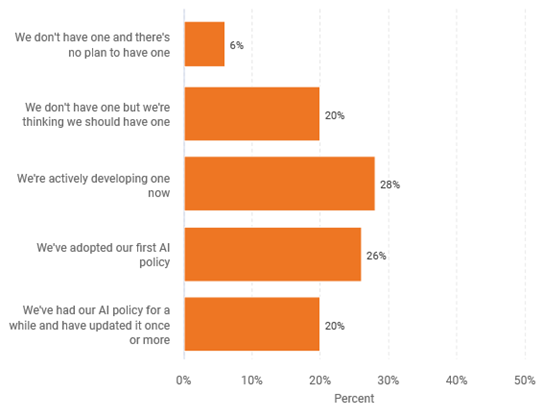
Figure 2: Where are you at with AI policy in your organisation?
However, just one in three leaders say they feel confident about their new responsibilities around AI which is entirely understandable. As a powerfully disruptive and rapidly evolving field we’re all still learning. As one CEO put it:
“We are trying to instil greater confidence and openness about when/how it is being used. The process of creating an AI policy was really helpful (and positive) in shaping what we can (and shouldn’t) be using AI to support.”
AI is different to other tools. Unlike previous technologies, it is becoming embedded across almost every digital system we use – and we use a LOT of tools. Managing it requires not just policy, but judgement.
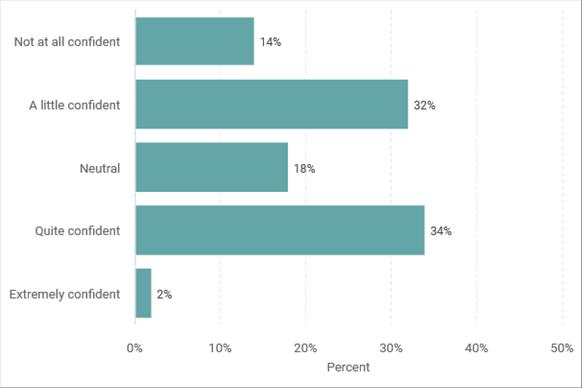
Figure 3: How confident do you feel about your new responsibilities as a leader around AI?
“It’s fast paced and it feels bewildering ….the biggest concern is about privacy and understanding how to ensure that staff can use it safely to support them without compromising the confidentiality of our data and organisation”
Power, agency, and unease
Many leaders share my deep concerns about ethics, environmental costs, and the danger of power in the wrong hands. It’s doubtful the tech broligarchy (thanks Carole Cadwalladr for the term) has humanity’s interests at heart.
“There seems to be a lot of us rushing headlong into adoption without thinking through the consequences, or how we manage it. We need to resist the rush and think it through, especially for our ethics and the impact on our beneficiaries – long term, not just short term. To be honest, the implications for democracy, accuracy, jobs and distribution of power all terrify me, and I worry it will drive us insane!”
AI isn’t just one tool that we’ve chosen. It’s arrived embedded. Everywhere, all at once. If I’m honest, I’ve often resented the loss of power and agency in having free choice and being intentional around it.
It’s like having an uninvited volunteer: confident, polished, endlessly ‘flattering and helpful’ but prone to lying, stealing, fantasy and requiring constant supervision.
That loss of agency unsettles leaders. It challenges how we think about resourcing work, roles, and responsibility. And it makes scepticism not just understandable, but necessary.
Like all good tools you need to invest in the paid version and do lots of staff training to get the best rewards. This means you select carefully, induct and train them to your organisation’s context and the specific tasks and problems – AND THE DATA – you want them to focus on…and carefully and collectively monitor everything it delivers you.
“There’s a lot of hype…it still needs organisations to do the unglamorous work of sorting out their data first”
Cautious optimism — with eyes wide open
Whilst mindful of the fears and concerns, there is much to feel hopeful and excited about. Done well, AI can be a lifesaver — literally — and a powerful force for good. I’m encouraged by the focus around ethics and responsibility in our sector and in governments. There are smart people scrutinising, campaigning and calling tech companies to account. Next month the charity Ethical Consumer is doing an AI special and I look forward to seeing what they say.
AI is not going away — but its future is still being shaped. Like many CEOs, my organisation is choosing to engage deliberately: continuing to learn, reviewing our practices, and creating space for open discussion, shared resources, and good practice across our sector.
Curiosity. Caution. Leadership with eyes wide open. That feels like the right place to stand.
A huge thanks to the 50 CEO’s who responded to my call to share their views on AI in the ACEVO community. You can see the anonymous responses to the poll.